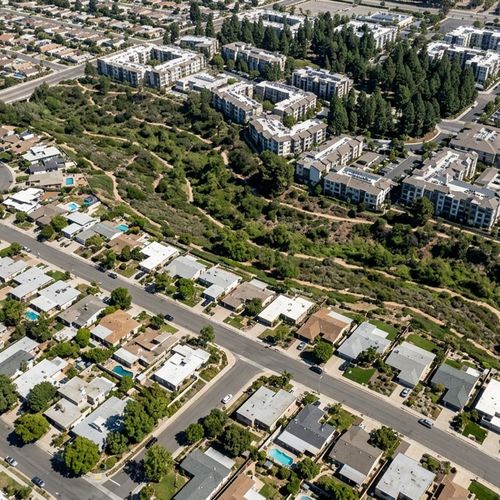

San Diego County's unemployment rate sits at 3.9% as of May 2026 - a number that points to a stable regional economy. For those living in University City, San Diego, the area specifically draws from a concentrated cluster of tech, biotech, and university employers, which shapes the job market here in ways that differ from the rest of the county.
The housing side reflects that. Homes in University City are selling at a median price of roughly $858,000, and they're spending an average of 23 days on the market before going under contract. Those two figures tell you a lot about how active this area is.
University City Employment Trends for 2026
San Diego County's 3.9% unemployment rate in May 2026 was actually down from 4.1% the month before. It's the most useful baseline we have for understanding what's happening at the neighborhood level, since University City doesn't get its own unemployment tracking.
What makes this area distinct is the type of employment it attracts. Higher education, life sciences, telecommunications - these aren't industries you find evenly distributed across San Diego. They're concentrated here, and that concentration is exactly why so many buyers specifically look for homes close to these campuses and corporate parks. Nobody wants to fight traffic from Chula Vista to get to a lab in La Jolla.
Local Hiring and Economic Growth
Neighborhood-level unemployment data isn't tracked for University City specifically, so the county figures are what we work with. What those figures show is a steady hiring environment, not a volatile one.
The specialized fields anchoring the local economy - research, biotech, higher ed - tend to hire continuously rather than in boom-and-bust cycles. That consistency matters when you're deciding where to buy.
Unemployment Rates Compared to the State
The county's 3.9% rate tracks below the broader state average, which reflects a real difference in how the San Diego regional economy is performing relative to other parts of California.
That gap has housing implications. With only about 2.8 months of housing supply available in University City, the active job market here keeps buyer demand steady. Supply stays tight when people want to live close to where they work.
California Employment Snapshot
California's unemployment rate dropped to 5.1% in July 2026 - the lowest point since February 2024. The state Employment Development Department (EDD) tracks these figures, and the trend line has been moving in the right direction.
The state average still sits higher than what San Diego County is seeing, but the direction matters as much as the number.
Current Hiring Activity in California
Employers across California are continuing to add roles, particularly in technical and specialized sectors. The drop to 5.1% reflects workers being absorbed into new positions at a gradual but sustained pace.
Different regions move at different speeds. San Diego's southern coastal economy tends to run ahead of the state average, which is consistent with what the May 2026 county numbers showed.
Long-Term State Job Outlook
California's economy runs on a wide base - agriculture, advanced technology, healthcare, logistics. That diversity supports long-term stability even when individual sectors have rough quarters.
If you're relocating from out of state, these broader indicators matter. The EDD data from 2026 gives a reasonable picture of where the state's workforce is headed, and right now that picture is more encouraging than it was in early 2024.
In-Demand Jobs in University City and California
San Diego's job market is showing particular strength in a few specific areas: medical and health services management, software engineering, logistics, and social work. These aren't just regionally strong - they're among the fastest-growing fields identified by local research.
Medical and health services manager roles are worth singling out. The median salary is $119,730, and the projected growth rate is 30% over the next decade. That kind of sustained growth in a high-earning field has a direct effect on who's shopping for homes in this price range.
Fastest-Growing Roles in San Diego
Software developers and logistics professionals are in consistent demand, which reflects the region's dual focus on technology and supply chain operations. Companies in and around University City recruit for these positions year-round - it's not seasonal.
Child, family, and school social workers also rank among the most needed professionals in the area. The workforce here isn't all engineers and lab researchers. That mix of technical, medical, and social service roles creates a more layered local economy than people sometimes expect.
Immediate Hiring Needs Across the State
Statewide, the high-demand fields mirror what's happening locally. Medical administrators and software engineers are top priorities for recruiters across California.
Logistics and operations roles are also worth mentioning for job seekers who don't have advanced degrees. These positions offer real pathways into the workforce and connect directly to California's large distribution networks.
Major Employers Driving the Local Economy
The San Diego metro area has some serious anchor employers. Qualcomm employs around 51,000 people. UC San Diego's workforce is roughly 37,064. Sempra runs 20,000 employees, General Atomics has 12,500, and Illumina sits at 7,600.
Several of those - UC San Diego, Illumina, and Qualcomm's UTC campus - operate directly in or immediately adjacent to University City. That's not a coincidence. The neighborhood grew around these institutions.
Top Private and Public Employers
UC San Diego shapes this neighborhood more than any other single employer. Academic, administrative, research - the university generates thousands of jobs across a wide range of roles, and its presence drives consistent housing demand from the people who fill them.
On the private side, Qualcomm and Illumina define the telecom and biotech employment landscape. Their campuses mean a steady supply of well-compensated professionals looking for housing within a reasonable commute distance.
Regional Corporate Headquarters
Sempra and General Atomics run workforces large enough to affect the entire county's economic picture. Their operations span multiple locations, but their corporate presence is part of what makes San Diego a legitimate major business hub rather than a satellite market.
Large headquarters also generate secondary employment - contractors, vendors, service businesses. That multiplier effect supports both residential and commercial real estate across the region.
Salary Expectations and Local Income
The median household income in University City was $120,558 in 2024, according to the U.S. Census Bureau. That's the most recent data available, and it represents a 2.8% increase from the prior year.
You need to hold that number up against the housing cost. With a median home sale price around $858,000, you're looking at a market where buyers are leaning heavily on the kind of salaries that tech and biotech employers actually pay. This isn't a neighborhood where median income and median home price sit comfortably close together - you need the upper end of those salary ranges to compete.
Earning Potential in University City
The specialized employment concentrated here pushes the local median income well above most other parts of the county. Medical and health services managers alone are earning close to $120,000 annually. Software engineers and biotech researchers are in similar territory.
Those salaries show up in buyer behavior. Homes in University City routinely sell for approximately 98% of their list price. When buyers are well-compensated and motivated, sellers don't need to discount much.
High-Paying Jobs Without a Degree
Not every competitive role here requires a four-year degree. Logistics, technical sales, and certain specialized operations positions offer real compensation based on experience and certifications rather than a diploma.
The region's large distribution and manufacturing facilities are where those opportunities tend to concentrate. It's a meaningful alternative pathway for workers looking to build financial stability in Southern California.
Government, Municipal, and Remote Roles
Public sector employment is a significant piece of the San Diego County workforce. The City of San Diego and the county government hire regularly for administrative, public safety, and maintenance positions - steady work with benefits that appeals to a lot of long-term residents.
State-level employment adds another layer, especially as remote work policies have evolved. California posts job announcements for roles that don't require daily attendance in Sacramento, which opens up options for people living in University City.
Working for the City and County
County operations require a large workforce to cover public health, infrastructure, and social services across the region. These aren't glamorous jobs, but they're stable ones.
The City of San Diego employs thousands across various departments. The range of roles is wider than most people realize - it's not just public safety and parks.
Remote State Employment
State agencies have expanded remote flexibility, which means professionals in University City can apply for positions based in other parts of California without relocating. Data analysis, administration, customer service - these are the types of roles that show up consistently on state employment portals.
It's a practical option worth checking if you're already here or planning to move here before locking down a job.
Where to Find Local Jobs
The state Employment Development Department (EDD) is the primary resource for labor market data and job matching in California. Their online portals are where you start if you want a systematic picture of what's open across industries.
At the local level, the San Diego Workforce Partnership focuses specifically on connecting employers and job seekers within the regional economy. They understand what this particular market needs in a way that a national job board can't replicate.
Local Job Boards and Agencies
The San Diego Workforce Partnership provides resources tailored to the county's major industries - not generic career advice, but targeted support for the sectors that actually dominate the local economy.
For biotech and academic positions specifically, industry-specific boards matter. UC San Diego runs its own hiring portals covering everything from facilities management to specialized research roles. If UCSD is a potential employer for you, that's your first stop.
Full-Time and Part-Time Openings
University City supports both ends of the employment spectrum. The retail and service businesses surrounding the campus hire part-time staff regularly, partly to accommodate student schedules. Full-time opportunities are concentrated in the corporate parks and medical facilities nearby.
Where you search should match what you need. A biotech researcher and a part-time service worker aren't using the same platforms, and they shouldn't be.
Frequently Asked Questions
How does the biotech and tech job market affect home prices in University City, San Diego?
The strong local job market directly supports housing demand. With major employers like Qualcomm and Illumina nearby, homes in University City maintain a median sale price of roughly $858,000. Properties also move quickly, spending a median of just 23 days on the market.
What time of year do new corporate and UCSD hires typically look for homes in University City?
Hiring happens year-round, keeping inventory tight across all seasons. The area currently has just 2.8 months of housing supply available. Buyers should expect competition regardless of the month they choose to shop.
Is it better to buy a home in University City or commute from neighboring San Diego suburbs for local tech jobs?
It depends on your budget and tolerance for traffic. Buying in University City places you close to UC San Diego and the Qualcomm UTC campus, but the median home price is roughly $858,000. Commuting from further out may offer different price points but adds daily drive time.
Will my University City property lose value if local biotech hiring slows down?
Property values fluctuate, but the local economy is diversified beyond just biotech. The area is also anchored by UC San Diego with around 37,064 employees and general tech firms like Qualcomm with 51,000 employees. This mix helps stabilize housing demand even if one sector cools.
Does the high concentration of healthcare and university jobs make University City a safe bet for rental property investments?
Yes, the constant influx of university staff and medical professionals creates steady demand for housing. The area's median household income was $120,558 in 2024, indicating a strong tenant base. Medical and health services manager roles are also projected to grow 30% over the next decade.
Which University City neighborhoods offer the best commute to the Golden Triangle employers?
Most homes within University City offer a short commute to the nearby corporate campuses. Buyers should look at properties near the UC San Diego campus or the UTC area for the fastest access to major employers like Qualcomm and Illumina.
Check out this article next