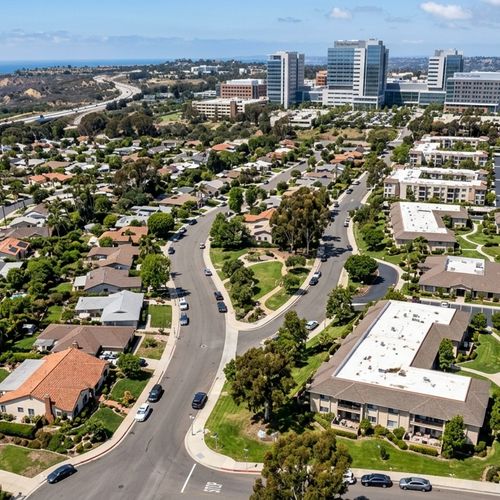
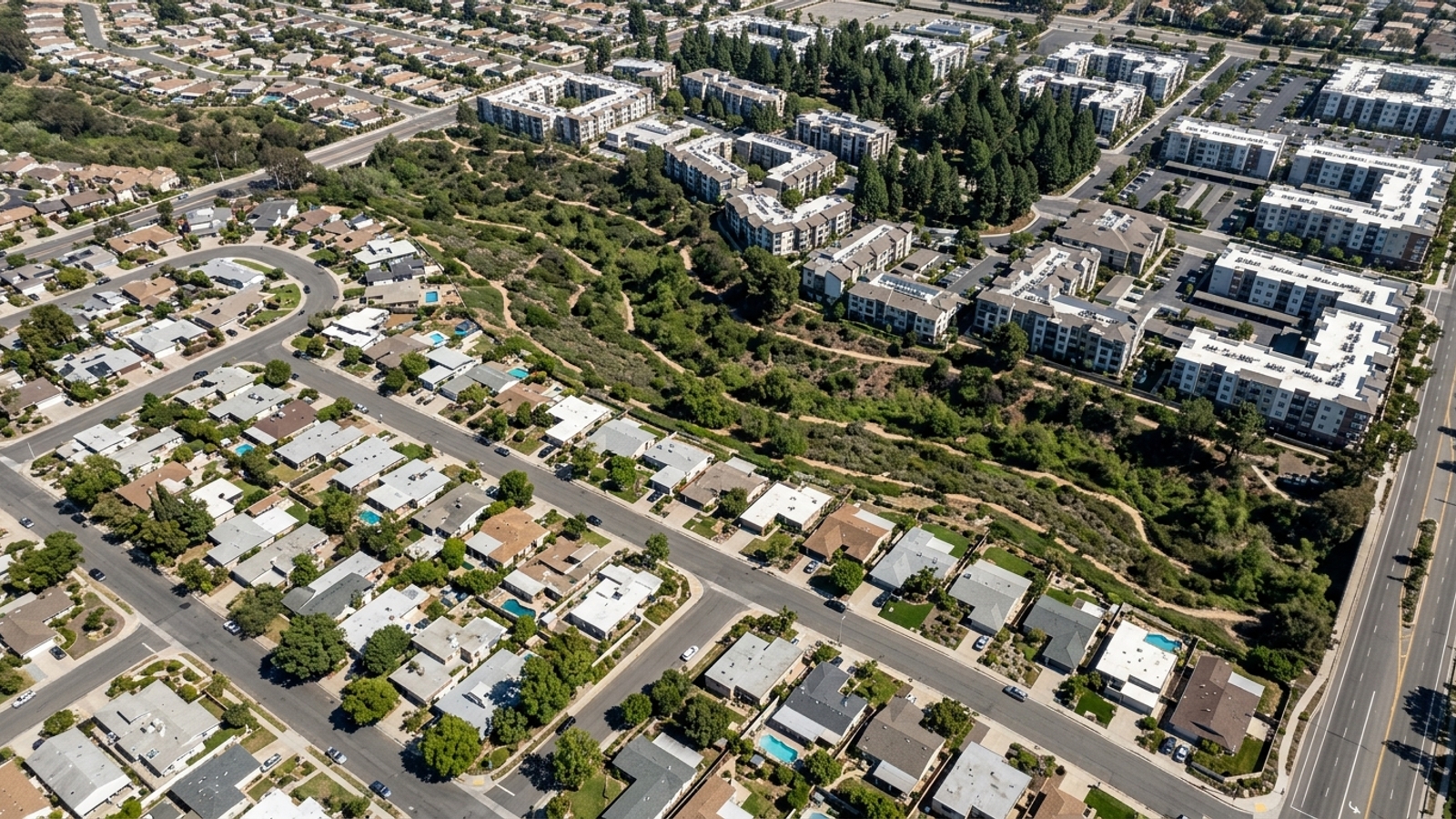
To understand living in University City, San Diego, you have to go back to a mid-century moment when planners looked at empty ranch land and decided to build something from scratch. The neighborhood was master-planned from the ground up to support a growing educational and scientific hub - and that original vision is still legible in the streets you drive today. The median home sale price now sits around $858,000, which tells you something about how well that plan held up.
Buyers moving here often ask how the neighborhood went from open grazing land to a major economic center. That's a fair question, and the answer matters practically - the original architectural choices and street layouts still dictate what's actually available on the market. Knowing why certain blocks are single-family tracts while others are dense condo developments saves you from surprises once you start touring.
A Quick Look at University City's Past and Present
The neighborhood was officially established in 1960. The year before, developers acquired 2,500 acres from local cattle ranchers George Sawday and Oliver Sexton to make the master plan possible.
That original footprint has grown into a mature, established community. There are roughly 103 homes available in inventory at any given time, and things move - homes typically go under contract in about 23 days.
Basic Facts About the Area
The community was designed alongside the Salk Institute and the newly founded UC San Diego, with planners intending it to serve as a residential haven where everyone from college presidents to university janitors could live side by side. It was an idealistic premise.
Over the decades, property values drifted well away from that mixed-income origin.
City, Town, or Neighborhood?
Despite the name, University City is not an independent municipality. It's a neighborhood within the city limits of San Diego, CA - residents rely on San Diego city services and fall under the city's municipal jurisdiction.
The broader local planning area also takes in nearby La Jolla Village and University Hills.
Location and County Details
University City sits entirely within San Diego County, occupying a central coastal-adjacent position that makes it a significant transit and employment hub for the wider region. The physical geography does a lot of the organizing here - canyons and major freeways draw the lines between residential tracts and commercial zones.
Position Within San Diego County
The neighborhood sits in the northern half of San Diego, bordered by major corridors including Interstate 5, which gives you direct routes to downtown and neighboring coastal towns. Because it's part of San Diego County, all real estate transactions are recorded with the county assessor. Standard county tax rates and assessment rules apply, and buyers should build those into their numbers early.
The Rose Canyon Divide
Rose Canyon physically splits the neighborhood into two distinct sections. The older southern section - historically known as University Square - centers around Governor Drive and consists mostly of single-family homes built out from the 1960s through the 1980s.
North UC is a different animal: higher-density apartments and condos built near Westfield UTC, developed later in the timeline.
The Meaning and Origin of the Neighborhood's Name
The name comes directly from the neighborhood's relationship with the University of California, San Diego. Founder Roger Revelle envisioned a standout institution when UCSD was established in 1960, and the surrounding land was named to make that connection explicit. Planners wanted the branding to tie the residential streets to the academic center without any ambiguity.
Tied to the University of California, San Diego
The name is essentially a mission statement - this was meant to be the city supporting the university. That intellectual hub concept drove the initial master plan and shaped the early zoning decisions and community amenities in ways that are still visible today.
The Founding and Development Timeline
Developers Irvin J. Kahn and Carlos Tavares spearheaded the master plan on the former ranch land. In 1960, Kahn commissioned architect William Krisel to design the initial tract housing - a decision that set the architectural tone for the southern half of the neighborhood. Construction expanded steadily through the 1970s and 1980s as the area filled in and became a fully realized suburban layout.
Master Planning in the 1960s
Krisel's mid-century modern influence is still visible in the older residential sections, and buyers actively look for those original floor plans when they're shopping near Governor Drive. The initial build-out was weighted heavily toward single-family homes with yards and community parks. The dense commercial and multi-family zoning in the north came later.
Evolving Real Estate
The original housing tracts have held up well. That median sale price of $858,000 reflects both the architectural appeal and the location, and sellers are averaging 98% of their list price at closing. The vision of a modest residential haven has become something considerably more expensive.
Historic Sites and Local Landmarks
Much of University City was built after 1960, but the land carries older footprints - a mix of mid-century infrastructure and earlier military history that breaks up the residential tracts and gives the area more layering than a typical postwar suburb.
The San Diego Temple and Camp Matthews
The San Diego Temple (LDS) is hard to miss - its white spires are visible from Interstate 5, marking the third temple built in California. It's one of the more striking visual anchors in the area.
Before the university and homes arrived, the land hosted Camp Calvin B. Matthews, a WWI-era rifle range base that opened in 1917 and closed in 1964 to make room for UC San Diego.
Nearby Historical Resources
For a dedicated history museum, most residents point visitors to the La Jolla Historical Society nearby - a nonprofit that promotes the history of the region's coastline and surrounding communities. The society features rotating exhibitions in its Wisteria Cottage galleries, covering the broader history of the coastal and coastal-adjacent neighborhoods.
What University City Is Known For Today
The neighborhood has grown well beyond its original residential scope and now functions as a major economic engine for the broader San Diego region. The blend of housing, retail, and commercial office space defines the modern market, and the short commute between residential streets and major employment centers is a consistent draw for buyers.
Tech, Biotech, and Retail
High-tech, bio-tech, and clean-tech businesses anchor the area, with major employers like Qualcomm headquartered here alongside biotech firm Illumina. Westfield UTC handles the retail and dining side, giving residents a central commercial hub. That combination - research institutes and retail in the same zip code - keeps steady buyer demand flowing into the neighborhood.
Frequently Asked Questions
How did the founding of UCSD influence the original housing development and current real estate values in University City?
The 1960 establishment of UCSD drove the initial master plan, which was designed specifically to house university staff and students. Today, the ongoing growth of the university and nearby research institutes keeps buyer demand strong - and that steady interest supports the area's median home price of roughly $858,000.
What is the historical difference in housing styles and construction years between North and South University City?
Rose Canyon separates the two areas both physically and historically. The southern section features single-family tract homes built between the 1960s and 1980s. North UC consists primarily of higher-density apartments and condos developed later, near Westfield UTC.
Are there historic property restrictions or original CC&Rs that affect remodeling older homes in University City, San Diego?
Many of the original 1960s housing tracts have standard covenants, conditions, and restrictions recorded by the developers, and those documents can govern exterior modifications - so reviewing them during escrow matters. That said, the area doesn't generally fall under city-mandated historic district remodeling bans.
Who were the original home builders in University City and are their mid-century floor plans still sought after by buyers?
Irvin J. Kahn and Carlos Tavares were the primary developers who master-planned the community. Kahn hired architect William Krisel in 1960 to design the initial tract homes. Buyers still actively seek out Krisel's mid-century modern designs in the southern part of the neighborhood.
Have historical zoning changes in University City, San Diego impacted property taxes or created legacy HOA fees for older homes?
Property taxes in University City follow standard San Diego County rates based on the home's purchase price, not legacy zoning. Newer condo developments in North UC carry modern homeowner association dues, but many of the older 1960s single-family tracts in the south don't have monthly HOA fees. Verify the specific fee structure for each property during your search - it varies.
Check out this article next