
The median home sale price in University City sits around $858,000, and available properties move fast - most selling in just 23 days. For older adults looking to downsize or transition into specialized housing, that pace makes early planning a practical financial necessity. Anyone considering living in University City, San Diego, should prepare for this fast-moving market. The broader competitive landscape doesn't help: there's only about 2.8 months of housing supply available at any given time.
University City offers a real range of living arrangements for seniors - from active 55+ apartment complexes near the University Towne Center (UTC) to assisted living facilities closer to South UC. Finding the right retirement community placement here means understanding the local housing options, the different levels of daily care each type provides, and the specific financial requirements attached to each one.
What to Know About 55+ and Retirement Communities in University City, CA
The federal Housing for Older Persons Act (HOPA) governs age-restricted housing across California. Under this law, a community can legally restrict residents by age as long as it meets specific occupancy rules - regulations that keep the property dedicated to older adults while still allowing some flexibility in household composition.
In University City, you'll find a mix of age-restricted apartments, continuing care facilities, and standard residential neighborhoods. Overall inventory hovers around 103 available homes at any given time, so the market is tight regardless of which direction you're looking.
The 80/20 Age Rule in California
California 55+ communities operate under the 80/20 rule: at least 80% of occupied units must house at least one person who is 55 or older. The community's HOA or property management enforces this ratio to maintain their legal age-restricted status.
The remaining 20% of units can technically house younger residents, but communities often write their own bylaws to restrict this further. Always read the specific HOA rules on spouses, adult children, or caregivers who are under 55 - don't assume anything.
Types of Communities in University City
The area supports several styles of senior living, ranging from independent apartment complexes to full-service medical facilities. The choice between them comes down to the resident's current health status and what their needs are likely to look like a few years from now.
Standard 55+ apartments appeal to active adults who want to downsize and shed property maintenance. Assisted living and continuing care facilities serve residents who need daily support with meals, medication, or mobility.
Types of Senior Living Available in University City
Senior living covers several distinct housing models, each offering a different level of daily support and medical care - from standard age-restricted apartment buildings to comprehensive centers with on-site nursing staff.
Knowing the difference matters because it keeps you from paying for services you don't need yet, or from placing a parent somewhere that can't actually handle what's coming.
55+ and Active-Adult Communities
These communities are for independent adults who don't require medical assistance or help with daily tasks. Residents live in private homes or apartments and share amenities like clubhouses, fitness centers, and organized social events.
Independent Living and Assisted Living
Independent living facilities provide private apartments along with communal dining, housekeeping, and transportation. Assisted living adds a layer of personal care - help with activities of daily living (ADLs) such as bathing, dressing, and medication management.
Continuing Care Retirement Communities (CCRC)
A CCRC offers multiple levels of care on a single campus, letting residents move from independent living to assisted living or skilled nursing as their health needs change. That tiered structure provides long-term stability without requiring a move to an entirely different facility down the road.
Notable 55+ Communities in University City, CA
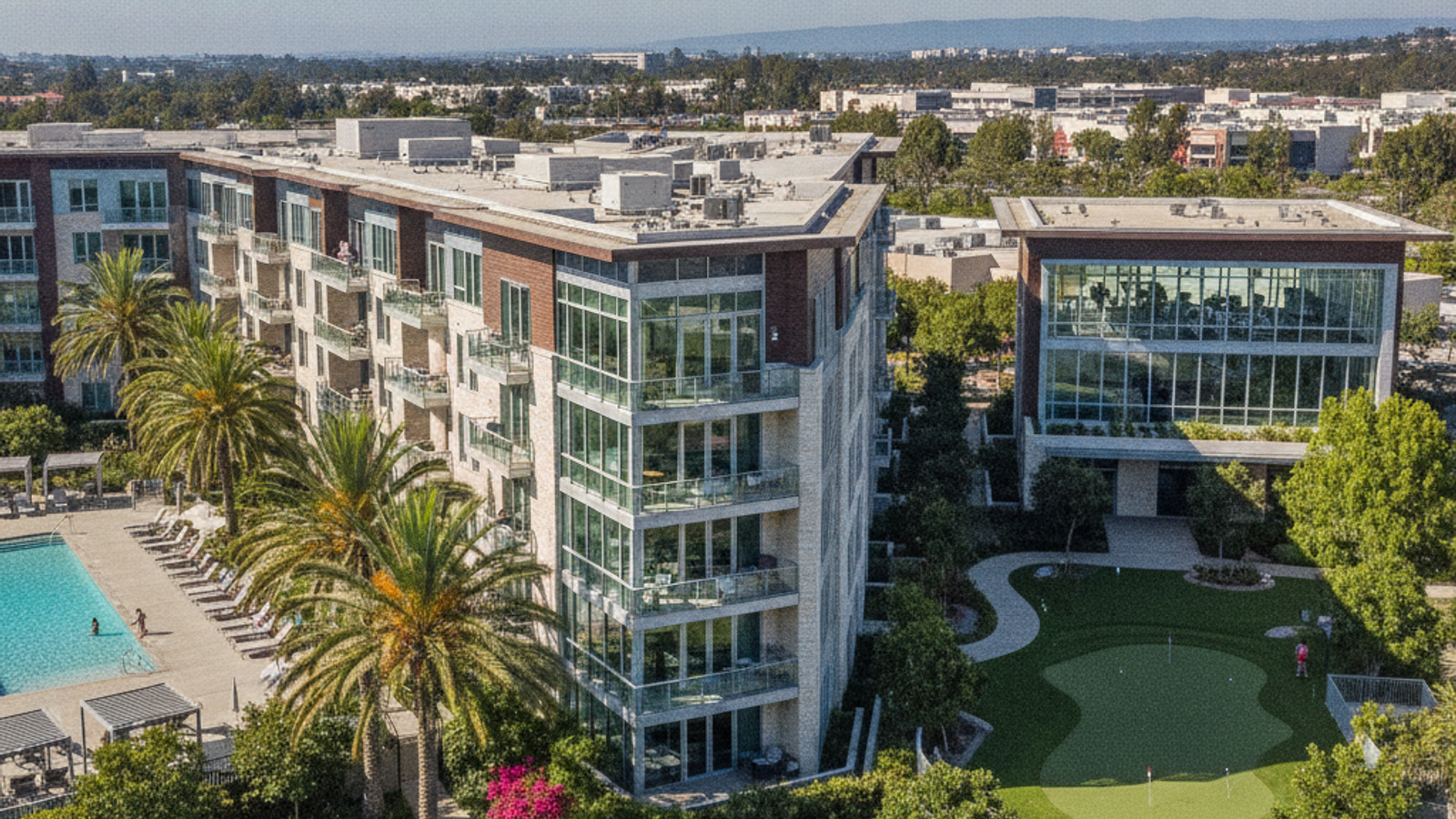
Several prominent 55+ communities operate within University City's boundaries, covering a range of price points and living styles - from high-end apartment complexes with resort-style pools to more standard residential villages.
Properties here benefit from the neighborhood's mild coastal climate and proximity to major commercial centers. You can choose between the denser, retail-heavy northern section near UTC or the quieter residential feel of South UC.
Luxury and Market-Rate Options
Notable upscale 55+ communities in University City include Avia La Jolla Senior Community, La Jolla Paseo, Casa Aldea at University City Village, and Canyon Park Apartments. These locations feature fitness centers, clubhouses, and dedicated social programming.
Affordable and Low-Income Senior Housing
Low-income seniors in San Diego can qualify for subsidized rental housing if their household income is no greater than 80% of the Area Median Income (AMI). Very low income is defined as 50% of AMI, and extremely low income is 30% of AMI - which translates to roughly $25,000 to $30,000 for a single person.
Most of the city's 41 to 62 low-income senior communities are spread across the broader San Diego area, though University City Village does offer some affordable senior housing options. Subsidized programs like Section 8 have closed waitlists in San Diego, with average wait times historically around 32 months. That's not a typo - plan accordingly.
What Does 55+ Living Cost in University City?
Overall neighborhood rents in University City average around $2,934 for a one-bedroom apartment and $3,841 for a two-bedroom unit. Specialized senior living facilities price their units based on the specific amenities and level of care provided.
Luxury 55+ options like Avia La Jolla, for example, list two-bedroom units starting at roughly $3,548 per month. If you're looking to purchase a standard residential home in the area instead, the median sale price runs around $858,000, with most properties selling for about 98% of their list price.
Entrance Fees and HOA Dues
CCRCs require a substantial upfront entrance fee on top of monthly maintenance charges. In California, those entrance fees generally start at $100,000 and can reach $1,000,000 or more depending on the unit size and the contract type. It's a significant commitment, and the refund terms vary widely - read that contract carefully.
Renting vs. Buying
Renting an apartment in a 55+ community gives you flexibility and eliminates property maintenance costs. Buying means a larger upfront investment and competing in a market where homes typically sell in just over three weeks.
Medicare and Medi-Cal Coverage
Medicare does not pay for room and board in assisted living facilities or for long-term custodial care. Low-income seniors may qualify for Medi-Cal, which can sometimes offer waivers to help cover care services within an assisted living setting - but it still doesn't cover the rent portion. That distinction catches a lot of families off guard.
Why Retirees Choose University City, CA
University City offers immediate access to major healthcare networks, including UC San Diego Health. That proximity to serious medical resources weighs heavily for a lot of older adults deciding where to land in the San Diego region.
The neighborhood divides geographically into the UTC area to the north and the more residential South UC to the south. You get relatively flat, walkable commercial centers and reasonable access to local transit routes - both of which matter more than most people anticipate before they actually move somewhere.
Healthcare Access and Walkability
Having UC San Diego Health close by means residents don't have to travel far for specialized treatment or emergency care. The UTC area's dense retail and dining options let residents handle errands or meet friends without depending entirely on a car.
Cost of Living Considerations
San Diego has a high cost of living, and University City reflects that. Retirees should budget carefully across housing, utilities, and healthcare - the amenities and climate are genuine, but so are the costs.
Pros and Cons of 55+ Communities
Age-restricted communities offer a predictable environment, but they come with HOA regulations and lifestyle rules that some people find more restrictive than they expected. Read the governing documents before you sign anything.
The main upside is access to peers and amenities designed specifically for older adults. The main downside is mandatory monthly fees and real limits on who can live in the home with you.
Benefits of 55+ Living
These communities tend to offer quiet surroundings, maintenance-free exteriors, and built-in social networks. The physical design of the homes often includes single-story layouts, wider doorways, and walk-in showers that accommodate aging in place - details that matter more over time.
Common Downsides
HOA fees in 55+ communities can increase annually, which hits retirees on a fixed income harder than most. These neighborhoods also lack multi-generational interaction, and strict rules govern how long younger family members - grandchildren included - can visit.
How to Choose and Tour a Community in University City
Visit in person. Online marketing materials rarely give you an honest picture of the daily atmosphere or the quality of the food.
When you schedule a tour, plan to be there during meal times or a social event so you can watch how residents and staff actually interact - not how they perform for a prospective resident. Pay attention to the condition of common areas and how quickly management responds to your questions.
Questions to Ask the Staff
Ask about historical fee increases and the staff-to-resident ratio. Get a clear answer on what happens if a resident's medical needs exceed what the facility is licensed to handle - because that situation comes up more often than anyone wants to admit.
Vetting Contracts and Reviews
Review the fine print on entrance fees, refund policies, and monthly care tier pricing. Talking to current residents will tell you things a guided tour never will.
Frequently Asked Questions
Do families pay out-of-pocket for senior placement services in University City, or do the communities cover the fee?
It depends on the type of advisor you use. In many cases, senior living communities pay a commission to the placement advisor once a resident moves in, making the service free for the family. However, if you hire an independent geriatric care manager in San Diego to evaluate options, you will pay them directly out-of-pocket.
What type of medical assessment is required before an older adult can move into a University City retirement community?
A thorough physician's assessment is typically required before moving into assisted living or a Continuing Care Retirement Community. The facility's nursing staff reviews these medical records to ensure they can meet the resident's daily care needs and to determine the appropriate pricing tier.
Which senior living communities in University City offer direct transportation or partnerships with UC San Diego Health?
It depends on the specific facility's amenities. Many 55+ communities, such as Avia La Jolla or Casa Aldea, offer scheduled shuttle services for medical appointments, and their location near UC San Diego Health makes coordinating these trips easier.
How quickly can a local placement advisor secure an assisted living room in University City after a sudden hospital discharge?
It depends on current availability and the required level of care. While the broader University City real estate market moves fast with homes selling in roughly 23 days, assisted living placements can sometimes be arranged in just a few days if a facility has an open unit and can expedite the medical assessment.
How do the large continuing care retirement communities (CCRCs) in University City compare to smaller residential board and care homes?
Large CCRCs offer multiple levels of care on one campus but require substantial upfront entrance fees, which in California generally start at $100,000 and can exceed $1,000,000. Smaller board and care homes operate out of standard single-family houses and typically charge a flat monthly rate without the massive entrance fee.
What happens if my parent's health declines rapidly shortly after being placed in a University City independent living facility?
It depends on the facility's licensing and structure. If they are in a standard 55+ apartment like Canyon Park Apartments, they will likely need to hire in-home care or move to an assisted living facility. If they are in a CCRC, they can transition directly to the on-site assisted living or skilled nursing wing.
Check out this article next