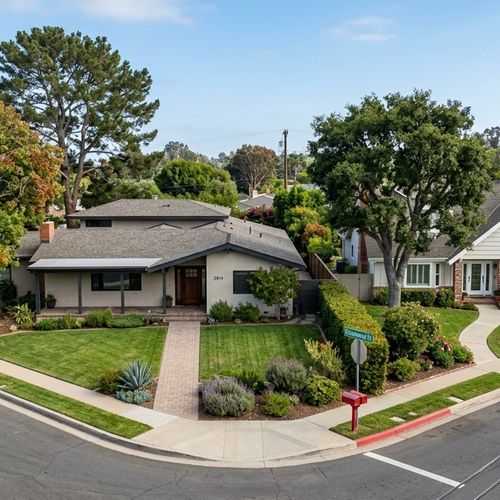
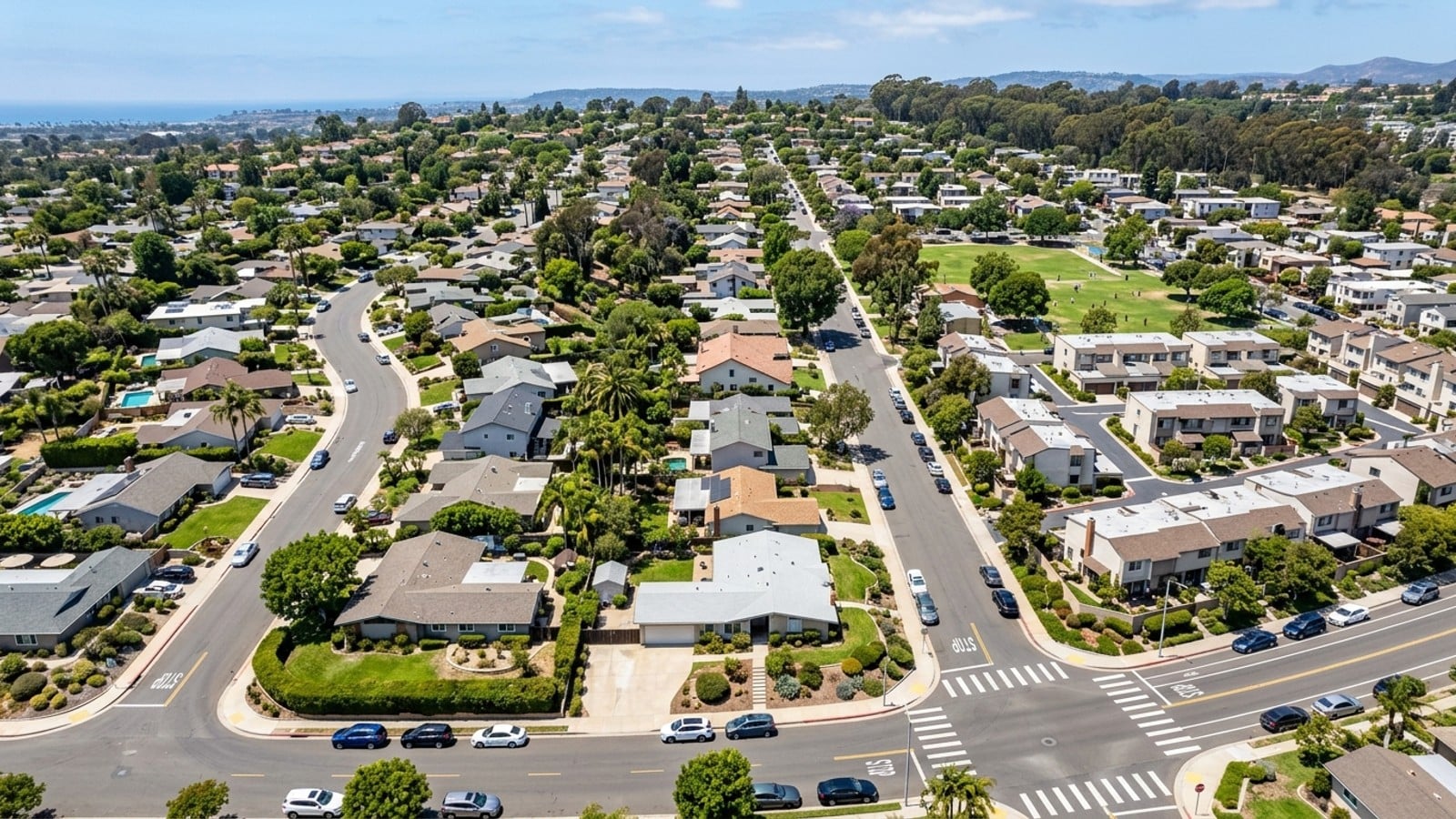
The median home price in University City is around $895,000, and homes are selling in roughly 24 days. At prices near the million-dollar mark, what you pay to sell a home in University City, San Diego isn't a rounding error - it's one of the biggest numbers on your closing statement.
Understanding how commissions work in San Diego, CA helps you budget accurately on both sides of the transaction. Recent industry rule changes have also shifted how buyer's agents get paid, which makes the traditional fee structure a bit more complicated than it used to be. Before you sign anything, you should know exactly where that money goes.
Average Realtor Commission Rates in California
Statewide, the average total real estate commission in California sits at about 5.47% of the sale price. In the San Diego area specifically, local transaction data shows a slightly lower typical range of 4.8% to 5.5% total.
None of these percentages are set by law. They're negotiable - every one of them. Knowing the baseline just helps you evaluate the listing agreements you'll receive from local brokerages, rather than accepting the first number someone puts in front of you.
Typical Commission Percentages Statewide
The statewide average of 5.47% typically covers both sides of the transaction, splitting roughly in half - about 2.73% to the listing agent and 2.74% to the buyer's agent. The broader historical range runs 3% to 6%, but most transactions land somewhere in the middle. You can negotiate these figures before you sign a listing agreement.
What That Means for a University City Home
The median sale price in University City is approximately $895,000. At a 5.47% total commission, that's roughly $48,956 in agent fees on a median-priced home.
Property type matters here. Blended figures for condos and townhomes sit closer to $807,000 to $854,500, while detached single-family homes in the neighborhood often run closer to $1,100,000 - so the actual dollar amount you're looking at depends on what you're selling.
How California Compares to the National Average
California's average commission rate runs slightly below the historical national average of roughly 5.5% to 6%. The reason is straightforward: higher home prices let brokerages accept a lower percentage and still earn a substantial dollar amount on each deal. Sellers in San Diego, CA tend to benefit from that math.
Who Pays Realtor Fees in California: Buyer or Seller?
Traditionally, the seller pays the total commission out of their sale proceeds at closing, and the seller's brokerage splits that fee with the brokerage representing the buyer. That's still the most common arrangement - but recent industry shifts have opened up other ways to handle buyer's agent compensation, and buyers and sellers now have more flexibility about who covers which side.
The Seller-Paid Listing Side
When you sign a listing agreement, you're agreeing to pay your listing agent a specific percentage of the final sale price. That fee covers marketing, MLS placement, negotiations, and managing the escrow process. It comes straight out of your proceeds - buyers don't pay the listing agent's commission.
Buyer's Agent Compensation Under New Rules
Sellers can still offer compensation to the buyer's agent - and many do, because it attracts more interest in the property. What's changed is that offers of compensation can no longer be published on the local MLS, and sellers are no longer required to make that offer at all.
If a seller declines to cover the buyer's agent fee, the buyer is responsible for paying their own agent. That arrangement has to be spelled out in a written buyer representation agreement before touring begins.
Do Buyers Ever Pay Realtor Fees Directly?
Yes, and it's becoming more common as the market adjusts to the new compensation guidelines. If the seller doesn't offer a commission split, the buyer pays their agent directly per the terms of their written agreement.
There's a workaround buyers use frequently: ask the seller for a closing cost credit during negotiations to cover the agent's fee. That rolls the cost into the transaction rather than requiring cash out of pocket at signing.
How Commissions Are Split and What Agents Make in San Diego
The total commission paid at closing doesn't go straight into one agent's pocket. It gets divided multiple times before anyone sees a paycheck.
Listing Versus Buyer's Agent Splits
The first split happens between the two brokerages. On a 5% total commission, the listing side might keep 2.5% and offer 2.5% to the buyer's side. Those funds go to the brokerages - not the individual agents - and then each brokerage distributes the money according to its own internal agreements.
Broker Splits and the 80/20 Rule
Once a brokerage receives its share, it takes a cut before paying the agent. A common arrangement is the 80/20 split: the agent keeps 80%, the brokerage retains 20% to cover office space, legal compliance, and administrative staff. Some agents negotiate different splits based on their sales volume, or pay a flat desk fee instead.
Agent Earnings on a Typical University City Sale
Take a detached single-family home in University City selling for $1,100,000. A 2.5% listing-side commission equals $27,500. On an 80/20 split, the listing agent takes home $22,000 before taxes and business expenses - out of which they're still paying for professional photography, staging consultations, and self-employment taxes.
That context is useful when you're negotiating fees. There's room to negotiate, but there's also a real cost structure underneath these numbers.
Recent Changes to California Real Estate Commission Rules
Major rule changes to how commissions work went into effect following a national settlement. The goal is transparency - both buyers and sellers now get clearer documentation of exactly what they're paying for representation.
What the Commission Rule Changes Mean
The most visible change: buyer's agent compensation offers can no longer be published on the MLS. Sellers can still offer to pay the buyer's agent, but that communication has to happen outside the MLS. Separately, buyers must sign a written representation agreement with their agent before touring a home, specifying exactly how much the agent will be paid and who's responsible for the fee.
The California Broker Fee Law
California law has long required that all real estate commissions be negotiable - there's no state-mandated fee, and brokerages can't collude to set a standard rate. State regulations also require clear disclosure of all fees in listing agreements and buyer contracts. Read those documents carefully before you sign.
Are Agents Still Charging Six Percent?
In high-priced markets like San Diego, CA, a flat 6% is less common than it used to be. Most full-service agents now work in the 4.8% to 5.5% total range. The final number is always a negotiation between you and the agent - what you're offered first isn't necessarily what you'll pay.
Are Commissions Negotiable? How to Pay Less
Every real estate commission is negotiable by law. You have the right to discuss fees with any prospective agent before signing anything.
In a market where the median home sells in 24 days, sellers frequently have leverage to request lower rates. There are a few concrete ways to reduce your selling costs.
Will an Agent Accept a Two Percent Commission?
Some listing agents will accept a 2% commission on their side, particularly on higher-priced homes where the dollar amount still makes sense for them. That brings your total down if you're also offering a standard 2.5% to the buyer's side. Agents are more likely to agree to a lower percentage when the home is in excellent condition and likely to sell quickly. Just ask what's included at the reduced rate - you want to make sure the marketing doesn't get cut along with the fee.
Flat-Fee and Discount Brokerages in San Diego
San Diego has a solid selection of flat-fee MLS brokerages - Houzeo, HomeZu, Brokerless, and Flat Fee Group among them. These companies list your property on the local MLS without charging a traditional listing percentage. Budget plans typically start around $45 to $299; standard plans run $325 to $699. You'd save the 2.5% to 3% listing fee, though you may still choose to offer compensation to a buyer's agent.
How to Reduce Realtor Fees When Selling
A tiered commission structure is one option - the agent earns a lower percentage if the home sells below a certain price. A dual agency agreement, where the listing agent represents both sides for a reduced total fee, is another. Interview multiple agents, compare what they're actually charging, and look at their average sale-to-list ratio alongside the fee. The cheapest agent and the best value aren't always the same thing.
Realtor Fees and Closing Costs
Commissions are the largest line item when you sell, but they're not the only one. There are additional closing costs deducted from your proceeds, and knowing the full picture prevents surprises at the table.
Typical Closing Costs Sellers Pay in California
Excluding agent commissions, average seller closing costs in California run about 2.71% of the sale price. That covers title and escrow fees, local transfer taxes, and recording fees. Add a typical 5.47% commission on top, and total seller expenses commonly land in the 8% to 10% range.
Who Usually Pays Closing Costs
Sellers carry the majority of closing costs, though the exact allocation is negotiable in the purchase contract. In Southern California, custom has the seller paying for the owner's title insurance policy. Buyers pay their own set of costs - loan origination fees, appraisal costs, and prepaid property taxes, primarily tied to their mortgage.
Transfer taxes and recording fees are set by local government - you don't negotiate those. Commissions and escrow fees, you do. Ask your agent for an estimated net sheet early in the process. It tells you exactly how much you'll walk away with after all commissions and closing costs are paid, which is the number that actually matters.
Realtor Fees for Rentals in University City
The fee structure for rentals looks very different from sales. California has no statewide law dictating who pays rental broker fees, so local market customs fill that gap.
San Diego is generally a less broker-fee-driven rental market for tenants. When landlords hire an agent to market a property and fill a vacancy, the landlord typically pays the fee. A tenant is usually only responsible for a broker fee if they independently hire an agent to help them search.
When a landlord does pay the fee, it's often calculated as a percentage of the annual rent or as a flat amount equal to one month's rent - covering photos, background checks, and lease drafting. Tenants searching for rentals in University City rarely encounter surprise broker fees on standard apartment listings. Property management companies typically build their leasing costs directly into the monthly rent.
Commission Calculator for California Sales
The math is simple: multiply your expected sale price by the total commission percentage. That's your estimated fee.
Estimate Your Commission by Sale Price
Sell a University City home for $900,000 at a 5% total commission - you're paying $45,000 in agent fees. At $1,200,000 and the same 5%, that's $60,000. Adjust the rate and the numbers shift meaningfully: a 4.5% total commission on that $900,000 sale drops the fee to $40,500, saving you $4,500 compared to the 5% scenario.
Estimate Your Net Proceeds
To estimate what you'll actually pocket, subtract your current mortgage balance, the total commission, and roughly 2.71% for closing costs from your sale price. On a $900,000 sale with no mortgage, subtracting $45,000 in commissions and $24,390 in closing costs leaves you with approximately $830,610.
Frequently Asked Questions
What is the average real estate commission rate for selling a home in University City right now?
Local sources report a typical total commission range of about 4.8% to 5.5% in the San Diego area. Statewide, the average is roughly 5.47%. These rates are always negotiable between the seller and the agent.
Do sellers in University City still pay the buyer's agent commission, or has that changed?
It depends on what the seller wants to do. Sellers can still choose to offer compensation to the buyer's agent to attract more offers, but they're no longer required to. If the seller declines, the buyer pays their own agent directly.
How does the competitive housing market near UCSD affect agent commission negotiations?
With homes selling in a median of 24 days and an average sale-to-list ratio of 98.5%, sellers tend to have real leverage. Agents may be more willing to accept a lower commission percentage on a home that's likely to sell quickly and above asking price.
What happens if I am buying a house in University City and the seller refuses to cover my realtor's fee?
You'll be responsible for paying your agent directly based on the terms of your written buyer representation agreement. You can also ask the seller for a closing cost credit during negotiations to help offset that expense.
Are flat-fee brokerages a reliable alternative to traditional commission agents in the San Diego UC area?
They're a legitimate way to save on listing fees. San Diego has a number of flat-fee MLS brokerages - Houzeo and HomeZu among them - that charge between $45 and $699 to list your home on the local MLS without a traditional 3% listing commission.
When exactly are real estate agent commissions paid out during a University City home sale?
At closing. The escrow company deducts the total agreed-upon fees directly from the seller's proceeds and distributes the funds to the respective brokerages before the seller receives their final payout.
Check out this article next